Most people who book a cosmetic procedure spend months researching surgeons. They cross-reference qualifications, read reviews, study before-and-after photos. By the time they sit down for surgery, they could probably draw the consultant’s signature from memory.
What they spend almost no time researching is the recovery.
This is understandable — the surgery feels like the hard part. But ask any specialist who works with post-operative bodies and they will tell you the same thing. The shape you see at six weeks is not the shape you keep. The shape you keep is decided by what happens to the swelling.
What lymphatic drainage actually is
Your lymphatic system is the quiet sister of the circulatory system. While blood vessels carry oxygen and nutrients to your tissues, lymph vessels carry away the waste — excess fluid, cellular debris, and the inflammatory products that build up after any kind of trauma to the body.
The system has no pump. Lymph moves through gentle muscle contraction, breath, and movement. After surgery, when you cannot move freely, that system grinds to a halt at exactly the moment it is needed most.
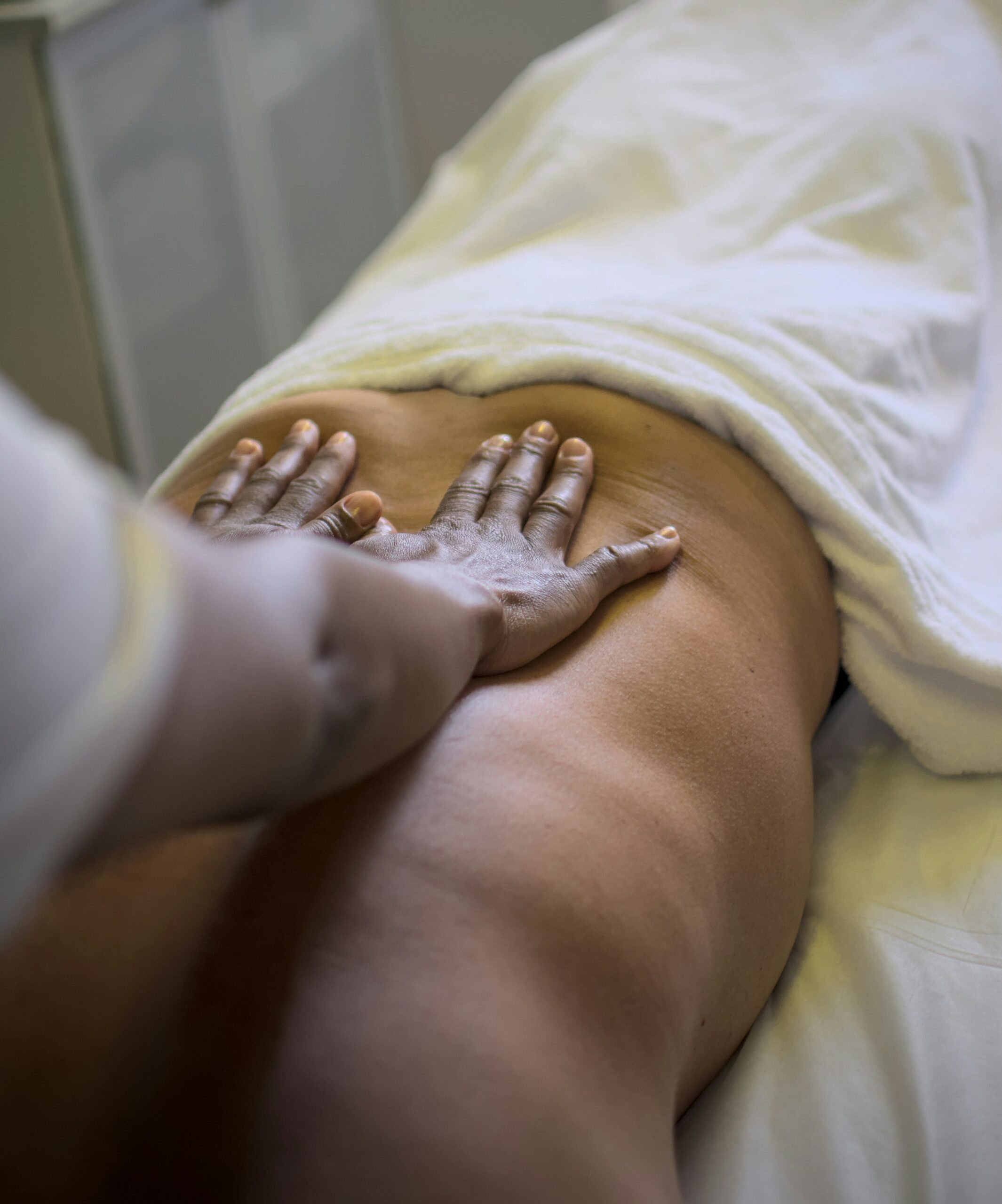
Manual lymphatic drainage is a slow, rhythmic, very light-pressure technique that mimics what your body would be doing if it could. It encourages stalled fluid to find its way back into the lymphatic vessels and out of the tissues.
Why it matters more after surgery than at any other time
After a procedure like liposuction, abdominoplasty or a BBL, the body’s response is dramatic. Tissue is disrupted. Capillaries open. Inflammation rises. Within 48 hours the area is full of fluid that has nowhere to go.
If that fluid is not moved, three things happen:
- Fibrosis develops — hardened, lumpy tissue where the body has tried to wall off the trapped fluid. Fibrosis can be permanent.
- Healing slows — oxygen and nutrients struggle to reach tissue that is waterlogged, prolonging discomfort.
- The final shape distorts — surgical results that looked even on the table heal unevenly. The contour is not what either of you intended.
None of this is rare. Most experienced surgeons now actively recommend lymphatic drainage as part of the recovery plan. Some won’t operate without confirming a client has booked their post-op work in advance.
When to start, how often, for how long
The first session is ideally between 48 and 72 hours after surgery, with your surgeon’s clearance. From there, frequency tapers gently:
- Weeks 1–2: two to three sessions per week
- Weeks 3–4: two sessions per week
- Weeks 5–8: one session per week
The total is usually eight to twelve sessions, though more complex procedures benefit from longer programmes. The aim is not to “do” the recovery faster but to do it cleanly.
What it should feel like
Done well, lymphatic drainage is one of the gentlest treatments you will ever experience. There should be no pain. Real lymphatic work uses pressures so light that it feels almost like brushing — anything firmer is doing something else, and not necessarily helping.
If you leave a session bruised, you have not had lymphatic drainage. You have had a deep tissue massage on a body that wasn’t ready for one.
A note on choosing a practitioner
The technique is specific. Practitioners trained in Vodder, Brazilian or Földi methods (the three recognised schools) will know what they are doing. Anyone offering “lymphatic massage” without naming the method, or who promises to “drain inches” in a single session, is selling something else.
At Gracious Contours, recovery work is the heart of the practice — coordinated with your surgeon, paced to your healing, and always done with the lightness the body needs.
If you are preparing for a procedure, or already in recovery and feel things are not progressing as expected, you can request a consultation by emailing hello@graciouscontours.co.uk or booking through the site.